For preventive disinfection, use 0.5 % aqueous solution of the drug at the rate of 0.25 - 0.3 l per 1 m² of area. Exposure time is 30 - 60 minutes.
For forced and final disinfection in infectious diseases of bacterial etiology, 0.5 -0.7 % aqueous solution of the drug is used at a consumption of 0.3-0.4 l per 1 m² of area. Exposure time is 60 - 120 minutes.
For disinfection in viral and fungicidal diseases, the product is used in the form of a 1.0% aqueous solution at the rate of 0.3 - 0.5 l per 1 m2 area. The exposition lasts 60 – 120 minutes.
To disinfect livestock premises for tuberculosis by wiping, irrigation or foaming, a 2.0% aqueous solution of the product is used with an exposure of 24 hours at the rate of 0.5 - 1 l of working solution per 1 m2 surface, or 3.0% aqueous solution of the product with exposure for 3 - 24 hours at the rate of 0.5 - 1 l of working solution per 1 m2 surface.
For preventive or forced disinfection in infectious diseases of bacterial, fungicidal and viral etiology by the method of fogging (aerosol spraying) use 10% - 15% working solution of the drug. Exposure is from 3 to 12 hours. The working solution is sprayed with the ventilation turned off. Fogging can be carried out both by cold and thermal methods using fog generators.
To fill the disinfectant barriers, 0.5 - 0.7% of the working solution of the drug is used, which is replaced as it becomes contaminated, dries out, or every 7 days.
Overdose (symptoms, emergency measures, antidotes)
It's irrelevant.
Special precautions
When using the product by aerosol disinfection method, a sharp unpleasant odor appears. After the exposure time, the room must be ventilated.
Equipment and supplies used for feeding poultry and animals (feeders, troughs, drinkers, etc.) are freed from food and water residues before wet disinfection. Before reuse, they are rinsed with water,
Withdrawal period (withdrawal period)
Not applicable.
Special precautions for persons and service personnel
Persons at least 18 years of age are allowed to work.
Disinfection by irrigation is carried out in compliance with measures to protect the respiratory system, skin and eyes (overalls, universal respirator, safety glasses, rubber gloves). Work related to the use of drug solutions by wiping and wetting is carried out using skin protection: overalls (gown), apron, cap, rubber gloves.
If precautions are not taken, local irritant reactions may occur if the product comes into contact with the skin and eyes, followed by the development of hyperemia, edema, and lacrimation.
If signs of respiratory irritation appear, stop working with the product, immediately move the victim to fresh air or another room. Rinse mouth and nasopharynx with water, and consult a doctor.
If the product accidentally gets into your eyes, you must immediately rinse them with running water for 10-15 minutes and consult a doctor.
In case of accidental contact with the skin, the affected area should be thoroughly washed with running water, then lubricate the skin with an emollient cream.
If the product accidentally enters the stomach, the victim should be given several glasses of water with 10-20 crushed activated charcoal tablets and should be seen by a doctor.
During disinfection work, personnel are prohibited from eating, drinking, and smoking. After finishing work, face and hands should be washed with soap and water.
Pharmaceutical features
Forms of incompatibility (main)
The product is not compatible with soaps, anionic surfactants, concentrated chlorine solutions, and oxidants.
Expiration date
2 years from the date of manufacture.
The shelf life of working solutions is 7 days, provided that they are stored in a tightly closed container, in a dark place. If signs of contamination appear (turbidity, appearance of flakes, sediment), the solution must be replaced.
Special storage precautions
Store in the manufacturer's container at a temperature of 5 °C to 25 °C in dry, dark, ventilated storage areas.
Nature and composition of the primary packaging container
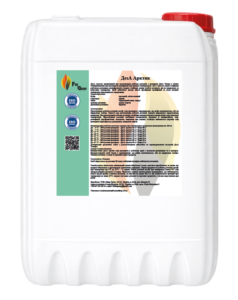
Polyethylene bottles of 1.5 liters, polyethylene canisters of 10, 20 liters and barrels of 200 liters.
Special precautions for handling unused medicinal product or waste materials
Store unused product in a tightly closed container out of reach of children and animals until the next disinfection.
If the concentrate storage period is exceeded or waste volumes of solution accumulate, they must be diluted with drinking water to a safe concentration (0.01%), flushed down the drain or covered with a non-combustible adsorbent (sand, earth, etc.) and taken to a disposal site.
Safety data sheet according to DSTU GOST 30333:2009